RINTIK and Kalara Borneo Push Cocoa as the Foundation for Downstream Processing and a Village Chocolate Industry in West Kalimantan
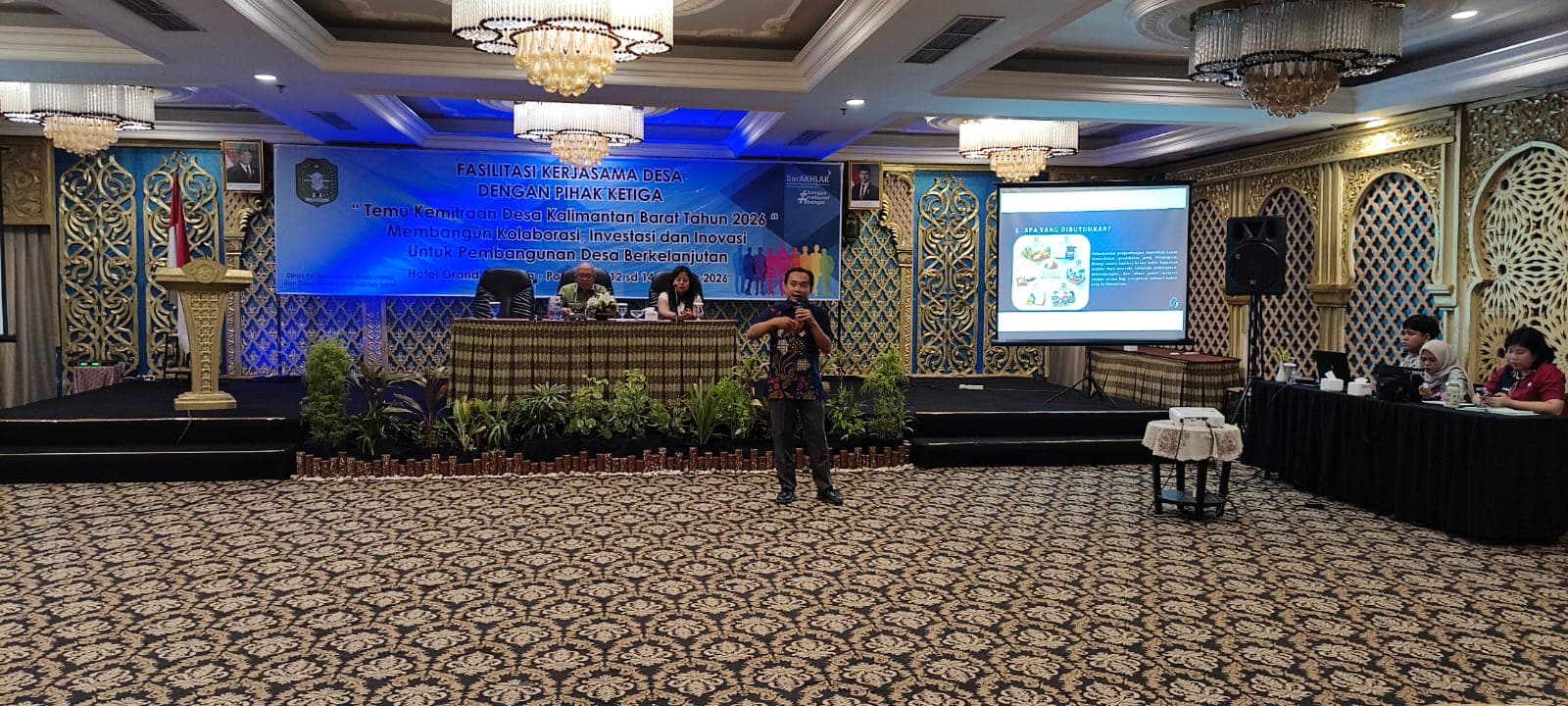
At the 2026 West Kalimantan Village Partnership Forum, Yoshyro Adiguna set out RINTIK's view: downstream cocoa processing has to start upstream — with cultivation, governance, institutions and the supply chain.
PONTIANAK — Developing cocoa in West Kalimantan has to start from a solid foundation. Not only higher production, but also governance, raw-material quality, institutions, the supply chain and market access all matter if cocoa is to grow into a source of added value for villages.
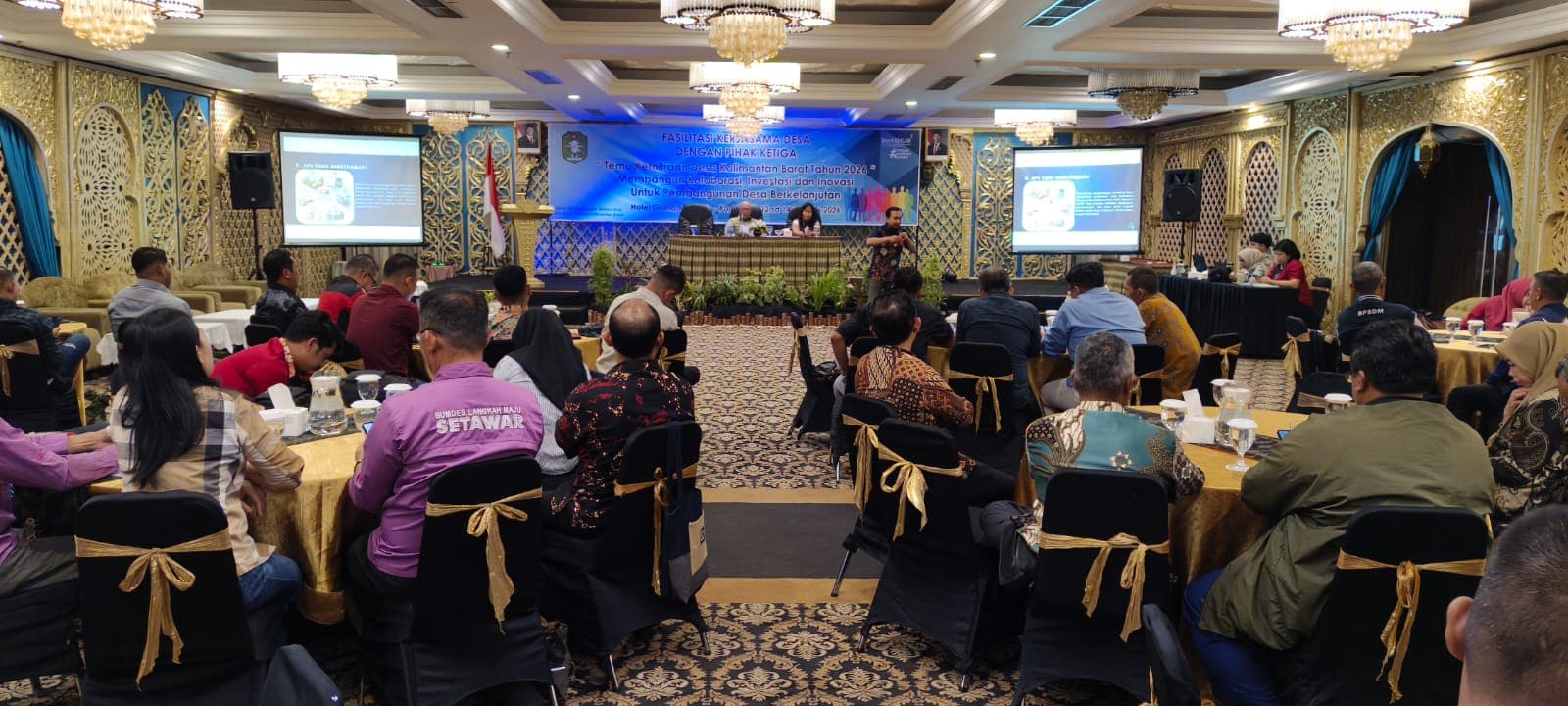
That was the argument put forward by Yoshyro Adiguna, a co-founder of Rantai Telisik Komunitas (RINTIK), at the 2026 West Kalimantan Village Partnership Forum held by the West Kalimantan Provincial Office for Village and Community Empowerment (PMD) in Pontianak on Thursday (13/8/2026).
Themed “Building Collaboration, Investment and Innovation for Sustainable Village Development,” the event brought together village governments, BUMDes (village-owned enterprises), joint BUMDes, businesses and a number of strategic partners to open up opportunities for cooperation, investment and market access for villages.
At the forum, Yoshyro presented RINTIK's perspective on building a village economy from the right foundation, with cocoa as one commodity that can be developed from upstream to downstream.
West Kalimantan Is Not Starting from Zero
In his presentation, Yoshyro stressed that West Kalimantan already holds the ecological, social and economic capital needed to develop cocoa.
“West Kalimantan is not starting from zero. The ecological, social and economic capital is already there. Our challenge is to connect all three into a cocoa industry ecosystem capable of creating added value in the region.”
According to RINTIK, that potential needs to be linked through an ecosystem involving farmers, village governments, village economic institutions, businesses, field facilitators, markets and many other parties.
Seen this way, cocoa is not merely an agricultural commodity to be produced and then sold, but part of a value chain that can deliver far greater economic benefit to village communities.
That process, however, requires a strong foundation.
Cultivation Is the Foundation of Downstream Processing
One of Yoshyro's central messages was that any conversation about downstream processing has to begin upstream.
Cultivation, in RINTIK's view, is not only about seedlings or managing a plot. It is inseparable from raw-material quality, human-resource capacity, technology, financing, facilitation and market access.
RINTIK stressed that a weak foundation will hold back the entire downstream process.
For that reason, when we talk about a village chocolate industry, processing facilities are not the only thing that needs preparing.
Villages also need the ability to produce quality raw materials, manage production well, build institutions, maintain the supply chain and meet market requirements.
That approach underpins RINTIK's concept of a Village Chocolate Industry, which brings together cultivation, institutions, collaboration, the supply chain and downstream processing.
From Commodity to Added Value
For RINTIK, developing cocoa is not simply a matter of raising production volume.
The real measure of success is how far the commodity improves farmer welfare, strengthens local industry, moves the village economy and safeguards natural resources.
Downstream processing is therefore an essential part of the cocoa development journey.
When villages are able to strengthen cultivation, governance, institutions and the supply chain, the opportunity to produce value-added goods grows with them.
Economic value does not have to stop at the sale of raw material. Through processing and product development, part of that added value can be created and retained locally.
It is within this framework that RINTIK sees the opportunity for a Village Chocolate Industry.
Not merely building a chocolate production site in a village, but building an ecosystem that connects the plots, the farmers, village institutions, the supply chain, processing and the market.
Collaboration as a Foundation
Yoshyro also stressed that cocoa development cannot be carried out by any single party.
“Collaboration is not an option, it is a requirement — every role has to move by the same rules and the same rhythm.”
Government, village governments, farmers, BUMDes, businesses, facilitators, financing institutions, technology providers and markets all hold interlocking roles.
Raw-material quality has to advance alongside human-resource capacity. Technology needs financing behind it. Production has to be connected to facilitation and market access.
RINTIK sees that synergy as an essential foundation for building a sustainable cocoa industry.
Through this approach, RINTIK argues that village economic development should be oriented not only toward how a commodity is sold, but toward building a value chain that creates greater benefit for the village.
As Yoshyro put it in his presentation, cultivation is not merely the act of planting cocoa — it is the whole foundation of a sustainable cocoa ecosystem: building a trusted supply chain, strengthening collaboration, bringing added value into the village and, ultimately, giving rise to a chocolate industry.
For RINTIK, building a village chocolate industry has to begin with one basic thing: building the village from the right foundation.