RINTIK Strengthens Cocoa Traceability and Opens Value-Chain Opportunities for BUMDes in West Kalimantan
In collaboration with Kalara Borneo, RINTIK is advancing cocoa traceability as an entry point to a transparent supply chain and fairer prices for smallholder farmers.
PONTIANAK — As markets increasingly demand transparency and certainty about where a product comes from, a village's ability to build a trustworthy supply chain matters more and more.
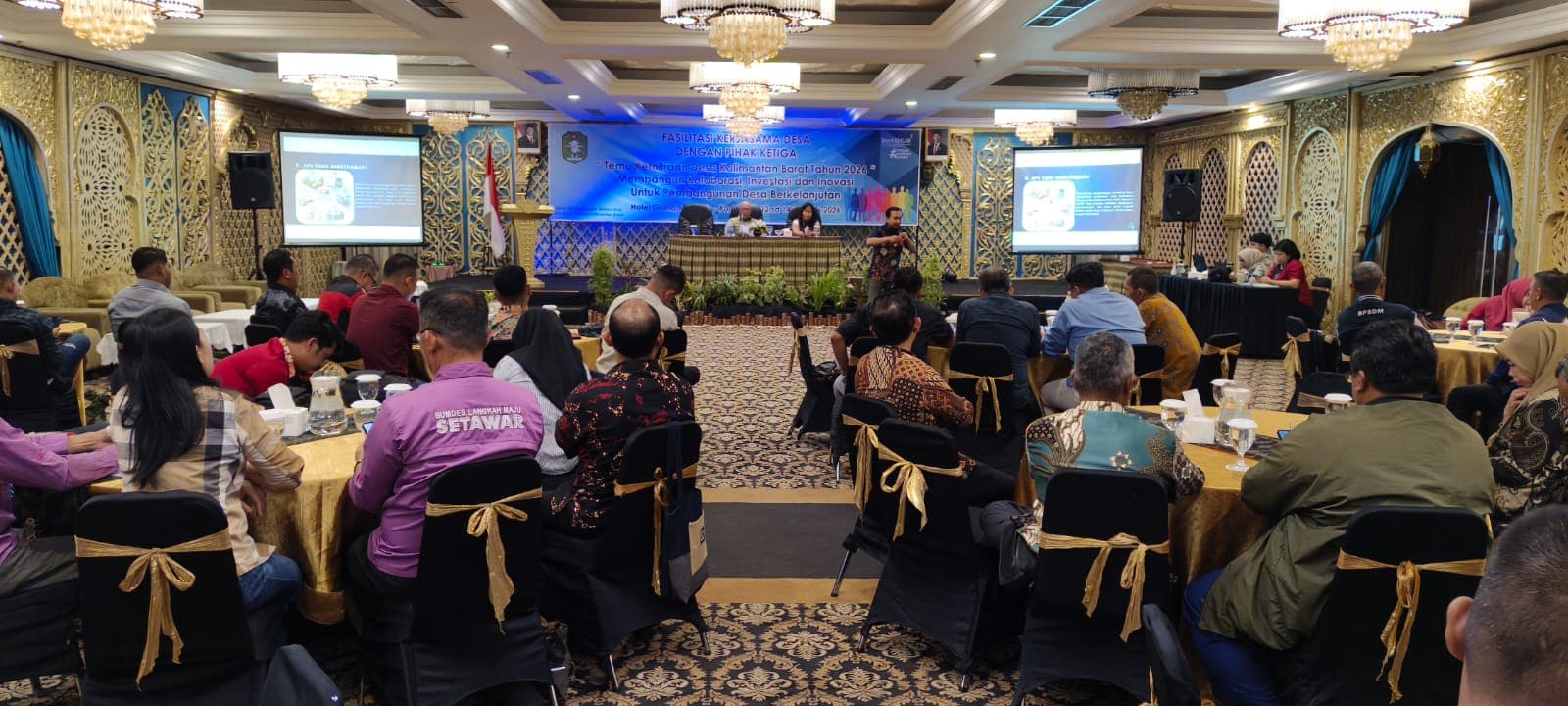
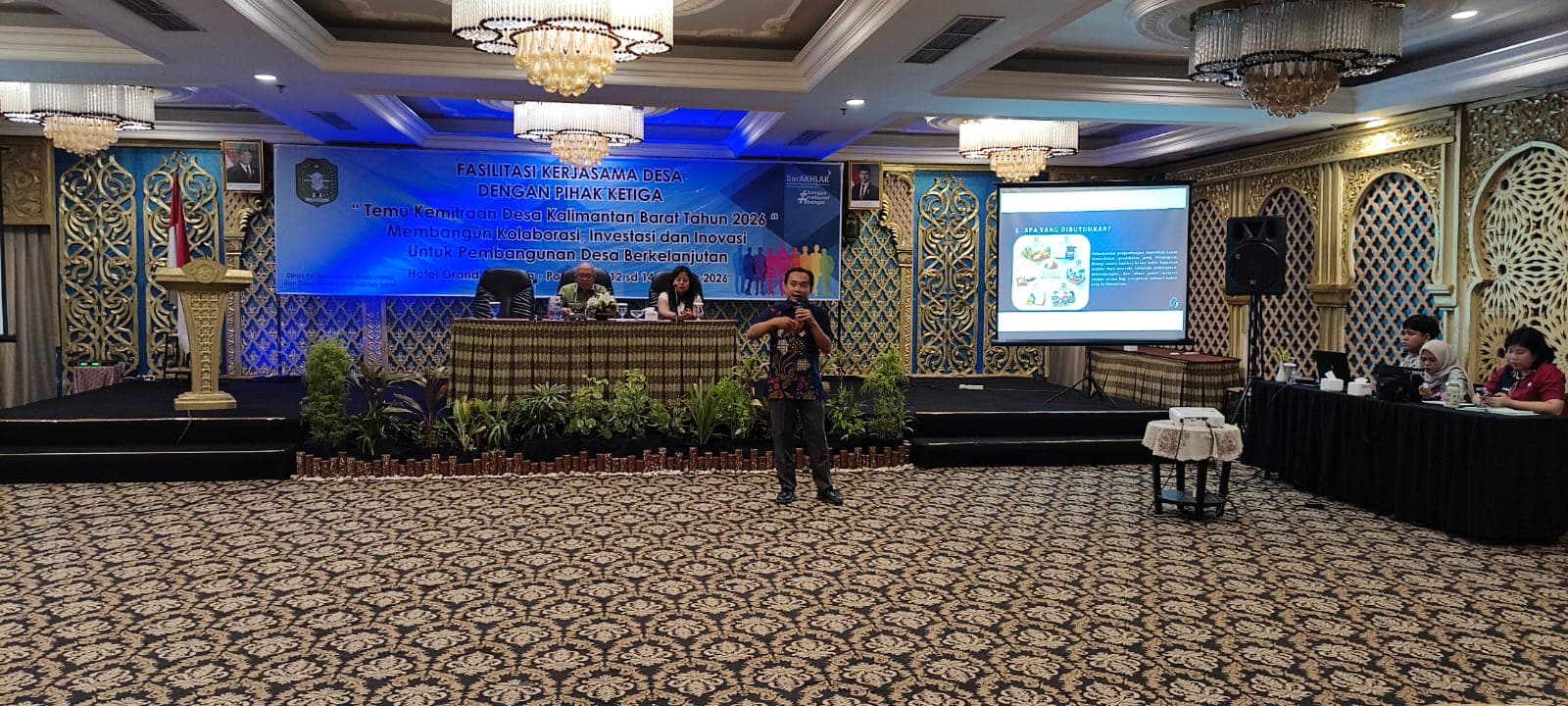
That was one of the concerns Rantai Telisik Komunitas (RINTIK) brought to the 2026 West Kalimantan Village Partnership Forum, held by the West Kalimantan Provincial Office for Village and Community Empowerment (PMD) in Pontianak on Thursday (13/8/2026).
Through a presentation by Yoshyro Adiguna, one of RINTIK's founders, the forum discussed the importance of traceability as part of strengthening commodity governance, particularly for cocoa.
For RINTIK, traceability is not only about meeting market requirements — it is an entry point for building fairer, more transparent relationships between farmers, village institutions, cooperatives and buyers.
Traceability Is More Than Paperwork
According to RINTIK, the challenge in cocoa development does not lie in raising production alone, but also in how that production is governed.
“The challenge is not only on the production side, but also in how production is governed.”
Traceability is an essential part of that governance.
With a traceability system, a commodity's journey can be seen far more clearly — from the origin of the raw material, through the production process, to the supply chain it passes through.
RINTIK sees demands for transparency, traceability and good governance becoming increasingly relevant in the trade of many commodities, cocoa included.
For RINTIK, traceability is not merely a requirement for entering a particular market.
More than that, traceability is part of building trust within the supply chain, so that information about a product's origin, production practices and the people involved becomes part of the relationship between farmers and buyers.
RINTIK and Kalara Borneo Collaborate
To strengthen that dimension, RINTIK is collaborating with Kalara Borneo on cocoa traceability.
The collaboration is part of an effort to build a more transparent and trusted supply chain, while opening the way for village-level commodity potential to connect with what the market needs.
For RINTIK, the partnership is part of a broader approach to building a system that gives village commodities an identity, sound governance and a supply chain that can be trusted.
It also aligns with RINTIK's conviction that village development requires collaboration among many parties whose roles complement one another.
BUMDes Show Strong Interest
The idea drew an enthusiastic response from forum participants, particularly BUMDes managers.
Their interest showed in discussions about developing village commodities through partnerships that go beyond buying and selling to include stronger production, governance, traceability, supply chains and market access.
For BUMDes, the approach offers a perspective in which village economic potential can be developed much further once village institutions are able to take a position within the value chain.
A BUMDes can act not only as a business unit that buys and sells commodities, but also as part of the process of organising village potential and connecting it with partners beyond the village.
Participants' enthusiasm showed that villages are not only looking for buyers, but also for a partnership model that helps them build a business more systematically, from upstream to downstream.
About RINTIK
Rantai Telisik Komunitas (RINTIK) works with an approach focused on strengthening smallholder farmers in West Kalimantan through traceability.
RINTIK walks alongside smallholders to build a system that places product origin, fair prices and sustainable practices into a single traceable record — for farmers, cooperatives and buyers alike.
The approach grew out of a simple but important problem: products from Kalimantan can pass through many hands before reaching a buyer who has never met the farmer.
RINTIK wants to shorten that information distance.
For RINTIK, a traceability system is not the end goal. It is the entry point to a larger conversation about fair prices, sustainable farming practices and the farmer's position in the value chain.
Three Founders, One Direction of Change
RINTIK was built by three founders: Yoshyro Adiguna, M.P Pentadakosta and Yeremias.
Each brings a complementary perspective to how RINTIK approaches farmers, traceability, sustainability and the local economy.
M.P Pentadakosta, one of RINTIK's founders, stresses the importance of making sure community empowerment is directly tied to economic benefit.
“Empowerment without an economic dimension is just a workshop people forget a week later. RINTIK starts with traceability so that the next conversation is about fair prices, not paperwork.”
Yeremias, meanwhile, sees traceability as a way to give the sustainable practices farmers already follow real value in the eyes of the market.
“If buyers can finally see how we care for the land, agroforestry stops looking like a sacrifice and becomes a story we can sell. That is what we want to build with RINTIK.”
Yoshyro Adiguna, who presented RINTIK's material at the 2026 Village Partnership Forum, brings the idea of strengthening the cocoa ecosystem from upstream to downstream.
All three perspectives converge on one larger idea: traceability has to produce tangible benefits for the communities at the upstream end of the supply chain.
From Traceability Toward Fairer Prices
For RINTIK, a traceability system means far more than knowing where a commodity came from.
When data and information about a commodity can be traced, the relationship between farmers and buyers can be built on a better level of transparency.
Information about product origin, production practices and a commodity's journey can become the basis for building trust.
From there, the conversation can move on to quality, sustainability and fairer prices.
The approach matters because smallholder farmers are often far removed from the end buyer, while the products they grow move through many hands before reaching the market.
RINTIK works to shorten that information distance through a traceability system that everyone in the supply chain can understand and use.
Toward a Village Chocolate Industry
Strengthening traceability is one part of RINTIK's vision for developing a Village Chocolate Industry.
In RINTIK's concept, a village chocolate industry is not only about processing cocoa into chocolate, but about building an ecosystem that connects cultivation, institutions, collaboration, the supply chain and downstream processing.
With that foundation, a village has the chance to move from raw-material supplier to a stronger position within the value chain.
The more added value that can be created locally, the greater the chance for economic activity to circulate and benefit the village community.
Cocoa development therefore needs to aim not only at producing a commodity, but at building a system that gives that commodity quality, identity, traceability and added value.
In the end, successful cocoa development has to be visible in rising farmer welfare, stronger local industry, a moving village economy and well-guarded natural resources.
By strengthening cultivation, governance, traceability, institutions and the supply chain, RINTIK is working so that villages in West Kalimantan are increasingly ready to connect with the market and develop value-added products.
For RINTIK, traceability is not merely a record of a commodity's journey. It is a way of making sure that the story, the origin, the work and the value of the farmer are not lost once the product leaves the village.