

Traceability System
Developing and piloting a traceability system built around Indigenous Peoples and Local Communities (IPLCs).
RINTIK walks alongside Indigenous Peoples and Local Communities in West Kalimantan, building a traceability system that holds origin, fair prices and management practice in one shared record — starting with cocoa, together with farmers and cooperatives.
Founded
Pilot villages, year one
Province
RINTIK — Rantai Telisik Komunitas — was founded in 2026 in Pontianak, West Kalimantan. We work alongside Indigenous Peoples and Local Communities (IPLCs) who manage the natural resources in their own territories, yet often hold the weakest bargaining position: prices are set far from the plot, sustainability claims cannot be verified, and rights to land, data and cultural identity are easily pushed aside.
We combine community organising with a traceability system we build ourselves, so that origin, price and management practice are held in one shared record. Cocoa in West Kalimantan is the first commodity where we are testing this approach, together with farmers, cooperatives and village economic institutions.
To realise the self-reliance of Indigenous Peoples and Local Communities (IPLCs) in managing natural resources — grounded in local wisdom and the principle of sustainability — through a traceability system that is fair, transparent and participatory, and that serves the common good for generations to come.
Build and strengthen a traceability system that stands with Indigenous Peoples and Local Communities (IPLCs) — fairly, transparently and participatively.
Raise the capacity of Indigenous Peoples and Local Communities (IPLCs) to manage natural resources independently and sustainably, grounded in local knowledge and cultural values.
Protect community rights over land, data, harvests, cultural identity and managed territory as a matter of sovereignty.
Advance social, economic and ecological justice through an alternative economic model that is anti-colonial and anti-extractive.
Deepen meaningful participation by women, youth, people with disabilities, minorities and other vulnerable groups across every development process within Indigenous Peoples and Local Communities (IPLCs).
Build strategic partnerships across sectors — the state, civil society, business, academia and media — to strengthen the bargaining position of Indigenous Peoples and Local Communities (IPLCs) in decision-making.
Six lines of work that turn RINTIK's vision and mission into activity on the ground alongside Indigenous Peoples and Local Communities.
Developing and piloting a traceability system built around Indigenous Peoples and Local Communities (IPLCs).
Technical training and field facilitation on customary-based natural resource management and the principle of sustainability.
Advocacy and protection of the rights of Indigenous Peoples and Local Communities (IPLCs) through participatory mapping, cultural documentation and legal facilitation.
Strengthening the economic capacity of Indigenous Peoples and Local Communities (IPLCs), including support for production, post-harvest handling and marketing.
Political education for Indigenous Peoples and Local Communities (IPLCs), particularly women and youth, to strengthen their involvement in decision-making.
Building networks and collaborative forums among Indigenous Peoples and Local Communities (IPLCs), government, civil society, business, academia and media.
We don't simply deploy technology — we build relationships, transfer knowledge, and keep walking with communities long after the first rollout.
Explore Our ProgramsSix outcomes that measure the success of RINTIK's work alongside Indigenous Peoples and Local Communities.
A community traceability system that is widely recognised and used within sustainable supply chains.
Greater capacity and self-reliance among Indigenous Peoples and Local Communities (IPLCs) in managing natural resources grounded in local wisdom.
Assured protection of the rights of Indigenous Peoples and Local Communities (IPLCs) over land, data and culture through legal instruments and institutional practice.
A fair and enduring economic alternative built in response to the dominance of the extractive economy.
Greater involvement of vulnerable groups across every aspect of decision-making within Indigenous Peoples and Local Communities (IPLCs).
Cross-sector partnerships that sustain the sovereignty movement of Indigenous Peoples and Local Communities (IPLCs).
Every line of RINTIK's work leads to two things: a sovereign livelihood, and a living space kept intact for the next generation.
RINTIK works toward a fair and self-reliant economic system at the community level, particularly for Indigenous Peoples and Local Communities. By developing enterprises grounded in the potential of legally recognised customary territory, RINTIK aims to create a sustainable source of livelihood without sacrificing the environment or culture. Production and distribution are managed directly by the community, so that it holds more power and is recognised both nationally and internationally.
RINTIK is committed to defending customary territory against land grabbing and destructive industrial activity. Alongside that, RINTIK works to raise a younger generation that understands its rights, holds its cultural identity close, and cares for the natural world. Through collaborative work and community education, RINTIK aims to strengthen people's position in managing and defending the space they live in.
RINTIK was founded in 2026, so these are the targets and commitments shaping our first year — not retrospective claims.
Founding year
Pilot villages, year one
Pillars guiding every program
Compromises on transparency
Every kilogram in the supply chain carries its own story. Tap a step to see what we record, who can see it, and why it matters.
Step 1 of 6
The supply chain starts at a known plot, with a known farmer.
Plot location, farmer profile, and on-farm practice are recorded together — so origin can be checked, not just claimed.
Our traceability platform is being deployed in our first pilot villages this year. If you'd like to walk through it with us, we'd love to hear from you.
Talk With UsOur work is built around three connected pillars. We start with our first pilot communities in Kalimantan, and our approach is open to a range of commodities as we grow.
Using and developing our traceability platform so every kilogram in the supply chain carries its origin — from a specific plot, through harvest, post-harvest handling, and delivery — visible to farmers, cooperatives, and buyers alike.
Practical training, cooperative organising, and financial literacy with farming families — so the people closest to the land also hold the knowledge and the bargaining power.
Agroforestry pilots, fair market access, and price premiums for verified good practice — building a community business model that is ecologically sound and economically just.
“Crops from Kalimantan travel through hands the farmer never meets. We want to change that — not with another report, but with a record everyone in the chain can read.”

Yeremias
Founder, RINTIK
“Empowerment without economics is a workshop people forget after a week. RINTIK starts with traceability so the next conversation is about fair price, not paperwork.”
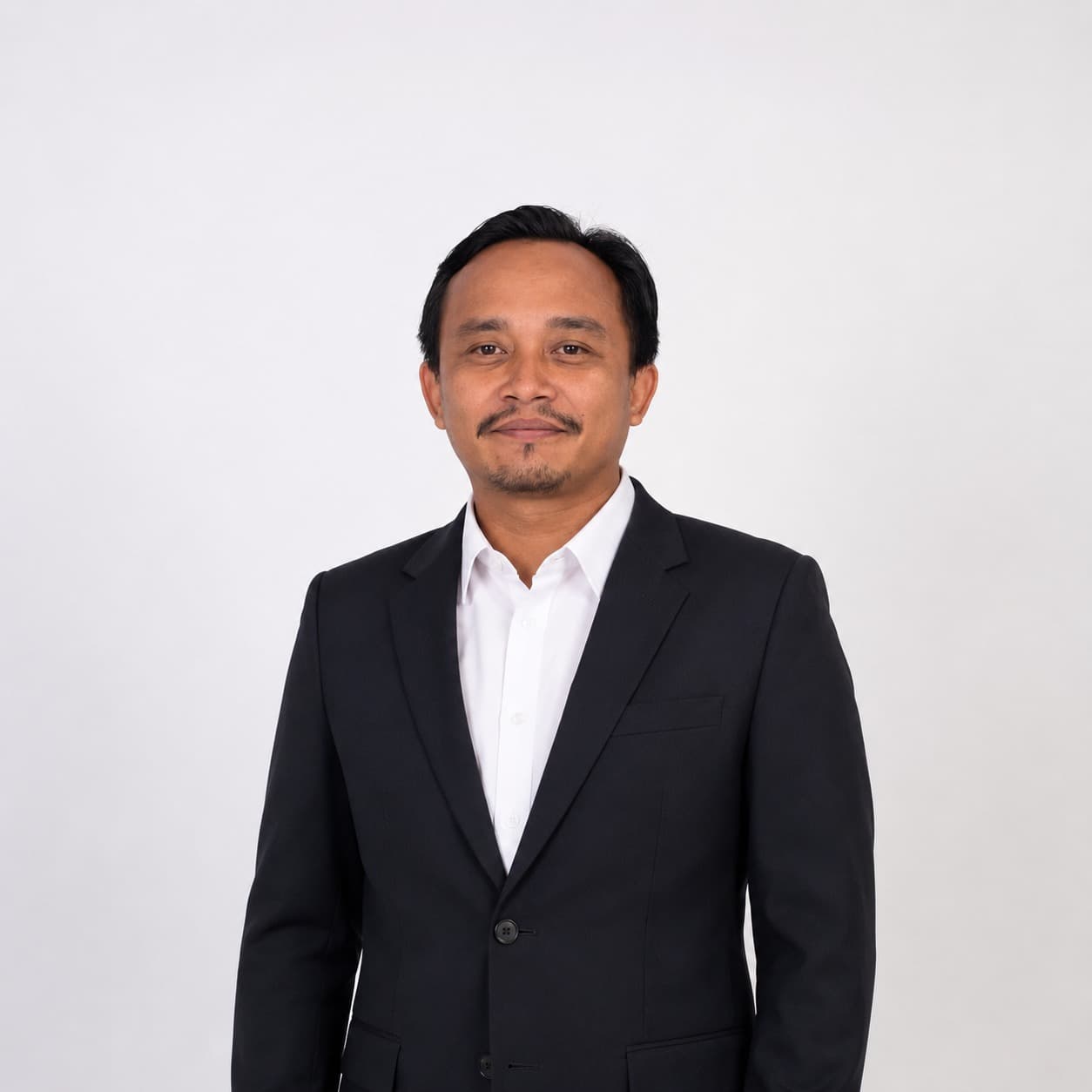
Yoshyro Adiguna
Founder, RINTIK
“If buyers can finally see how we tend our land, agroforestry stops being a sacrifice and starts being a story we can sell. That is what we hope to build with RINTIK.”

M.P Pentadakosta
Founder, RINTIK
RINTIK is launching in 2026 with a lean founding team. Names below are placeholders for the roles we are filling — we will publish full bios as soon as the team is signed.
Yeremias
Founder
Yoshyro Adiguna
Founder
M.P Pentadakosta
Founder
RINTIK is just beginning. There are several ways you can walk with us — as a supporter, a partner, or a volunteer.
A one-time or recurring contribution helps us onboard our first cooperatives, deploy our traceability platform, and seed agroforestry plots.
Make a ContributionAre you a cooperative, buyer, or organisation that values transparent sourcing? Let's design something together.
Become a PartnerLend your skills in technology, agronomy, finance, or communications to help us scale our first-year work in West Kalimantan.
Join Our TeamSubscribe for updates from our founding year — programmes, impact reports, and ways to get involved.
We respect your privacy. Unsubscribe anytime.
Our founding team is small, and we read every message. We aim to reply within 1–2 business days.
Contact UsUpdates, reflections, and field notes from RINTIK's first months in West Kalimantan.
 Cocoa & Downstream
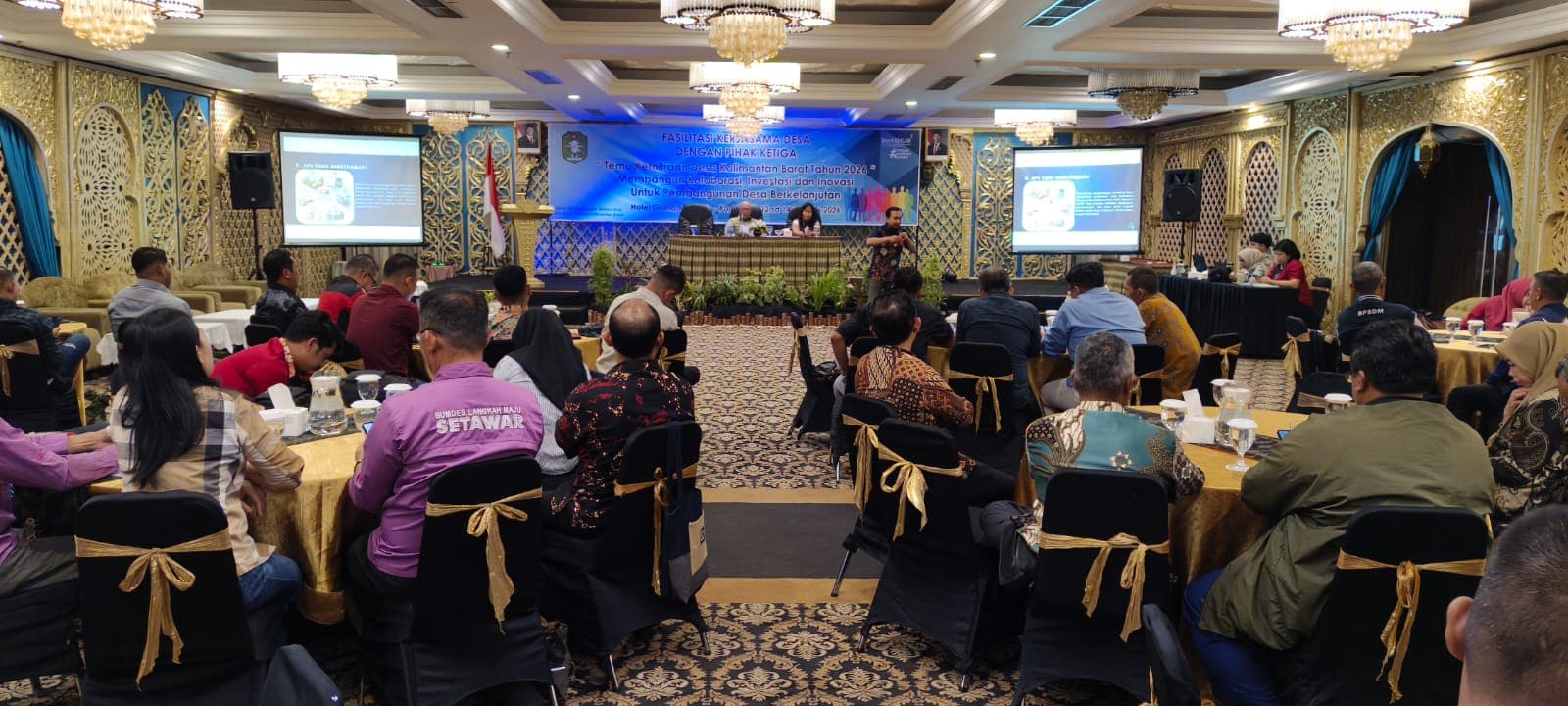
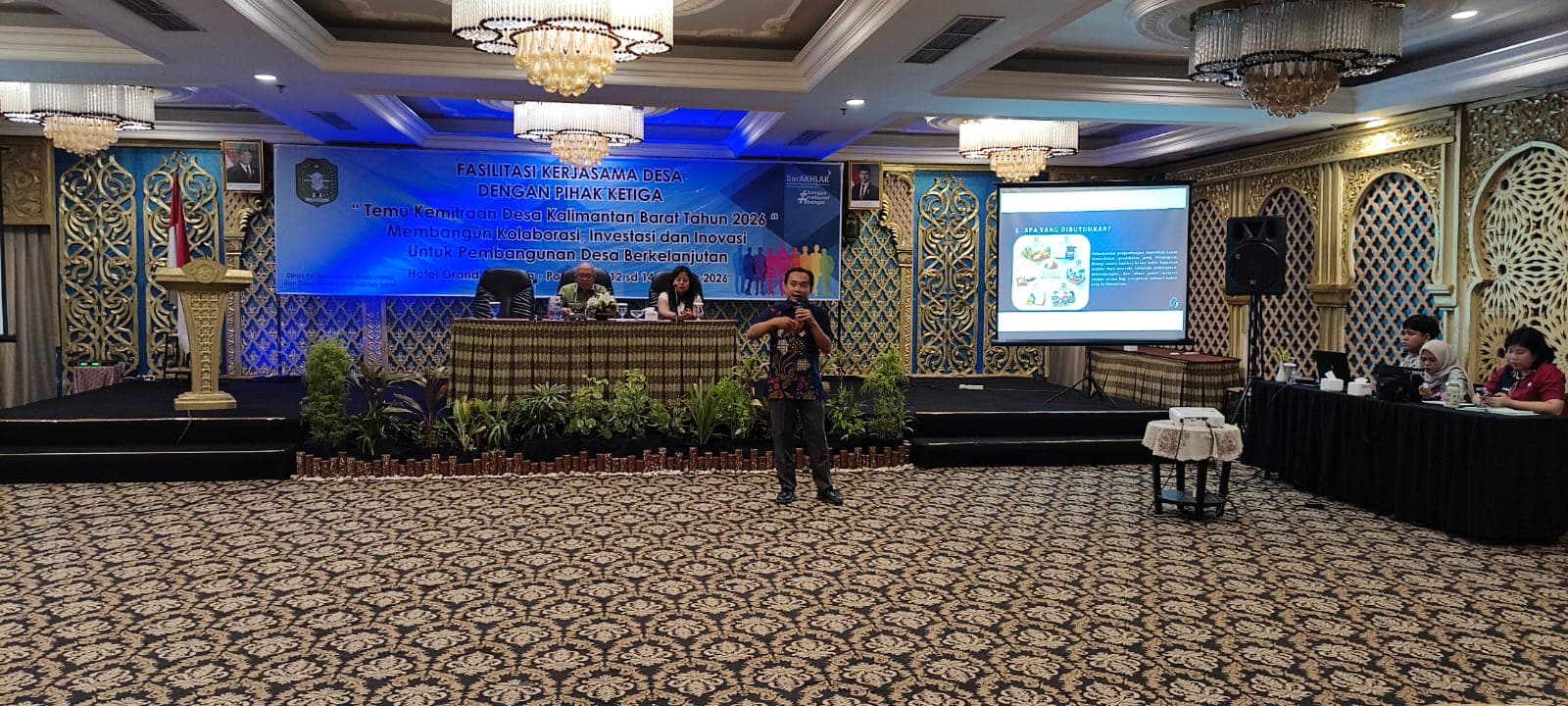
At the 2026 West Kalimantan Village Partnership Forum, RINTIK argued that downstream cocoa processing has to start upstream — with cultivation, governance, institutions and the supply chain.
 Traceability
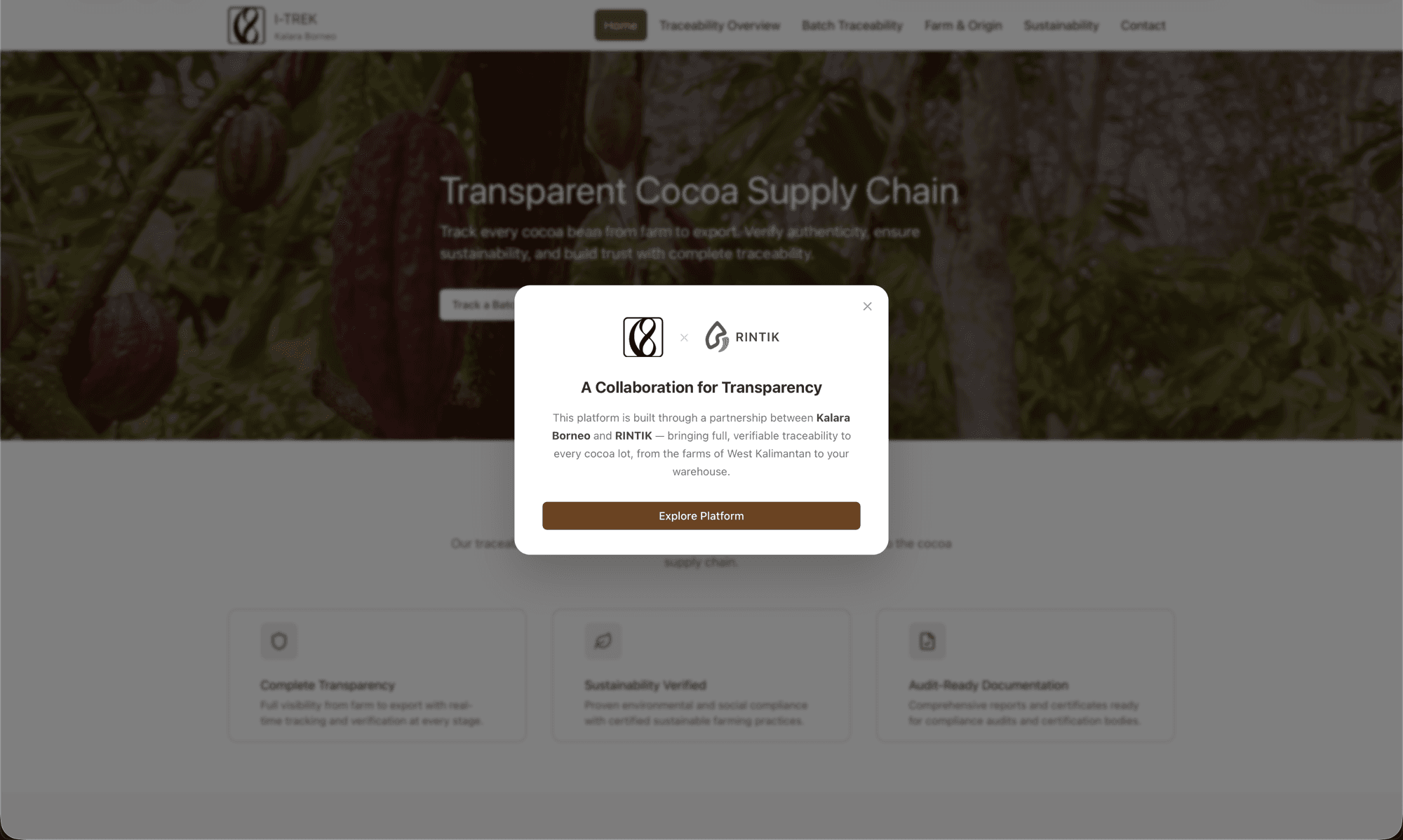
With Kalara Borneo, RINTIK is advancing cocoa traceability as an entry point to a transparent supply chain and fairer prices for smallholder farmers.
 Traceability
Harvest, post-harvest, and delivery records are now captured end-to-end in our first pilot — open to the farmers and the buyer alike.
 Announcement
Rantai Telisik Komunitas opens its doors in 2026 with three founding pillars: supply-chain traceability, community empowerment, and a sustainable economy.
Whether you're a cooperative, a buyer, a researcher, or a fellow non-profit, our founding team replies within 1–2 business days.
Head Office
Jalan Tekam, Gang Abdullah, RT 000 / RW 000, Tanjung Hulu Subdistrict, East Pontianak District, Pontianak City, West Kalimantan, Indonesia
Phone / WhatsApp
0878-9532-6986